No monster does to others what humans do to one another. Pain and tragedy are never forgotten, even as centuries pass. By the hand of
the tyrant-wannabes who fancy themselves immortal — and the masses who remain silent in their wake — history’s most devastating massacres, tragedies, and genocides continue to unfold, etching these individuals’ names as dark stains upon the record of time.
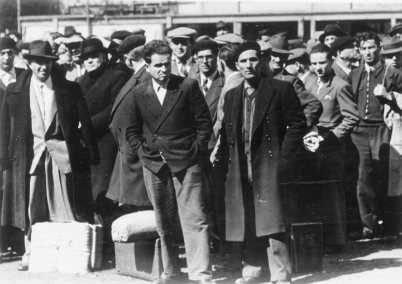
From 1941 onwards, Jews living in France were gathered here before being deported to concentration and extermination camps — Auschwitz chief among them. Approximately 63,000 Jewish people were deported via Drancy. Conditions inside the camp were utterly dire: starvation, lack of hygiene, and brutal mistreatment were commonplace. The final convoy departed near the war’s end in 1944. As they fled, the Nazis attempted to burn the camp’s records — yet some prisoners managed to save the name files.
The other day, I visited the Cité de la Muette in Drancy, just outside Paris. Built in the 1930s as a modern social housing project for low-income families, it was transformed into an internment camp during the German occupation of World War II.
After the war, the site was returned to residential use. Over time, it was transformed into a major memorial and educational center preserving the memory of the Holocaust. In 2012, the Drancy Shoah Memorial opened its doors to the public.
Inside the museum, I watched hidden lives unfold. They mirrored our own stories. With a heavy heart, I witnessed the tearing away of vibrant human beings from life itself — their exclusion, their othering, their herding into camps without distinction of gender or age, and their annihilation.
From the moment you enter, an audio guide takes you through the history of the site and the genocide — you don’t merely learn about it; you live it. Screens appear before you where you can hear the testimonies of those who survived. You choose a survivor, and you hear their story in their own voice.
Within each story, you can select the chapters you wish to explore: the arrest in Paris in August 1941, arrival at the Drancy camp, waiting in the courtyard on the first day, the violence of the gendarmes, the first night, the first meal distribution, memories of a father, the conduct of French police and gendarmes, the cold and hunger and despair of the winter of 1941, the release of those who had grown dangerously ill and frail, the shock of ordinary life after leaving the camp, the return home, the changing conditions within the camp, the re-arrest of parents, their transfer to the Vittel camp, the period of liberation, the trial of the gendarmes, and what Drancy represents as a place in history…
One such story belongs to Léon Niego. He lived with his wife Sultana and their son Albert at 26 Rue Popincourt in Paris. He had lost his Turkish citizenship after joining the French army. His wife had helped him learn to sew. On 20 August 1941, he was arrested at home by French gendarmes, held first at Drancy, then transferred to the Compiègne camp in April 1942. In June he was brought back to Drancy, and on 18 September 1942, he was deported to Auschwitz.
Léon was a heavy smoker. In a letter to his wife, he referred to the shoulder pads of his jacket and asked her to speak with “Monsieur Humo” — a coded signal for her to understand that she should hide cigarettes in the shoulder of the jacket before sending it to him.
While interned at Drancy, Léon carved an inscription onto a canteen for his son Albert. The object was delivered to the family by a fellow prisoner who had been released on health grounds.
You can witness these sorrows firsthand — heard directly from those who lived them. Some speak of their final days in the camp, of impossible conditions, of the tortures they endured. Special attention is also given to the gendarmes and officers of the era who helped the prisoners; in a gesture of gratitude, their testimonies are included as well.
A dedicated section has been set aside in memory of the four thousand children who were held in the camp. Their photographs are on display, and special interviews with survivors have been recorded. Watching it all, you cannot hold back your tears — moved by the extraordinary dignity with which these people carried such unfathomable suffering.
Recovered official documents are projected on digital screens: how many prisoners were held, how many were children, the years of their internment, the countries from which they were deported and brought here. Scale models of the camp and historical photographs are also on display. By touching the digital screens, visitors can view drawings made by the prisoners themselves and read entries from their diaries.
At the end of the memorial, gratitude is expressed to those who made it possible to pass this museum and its mission on to future generations — and visitors are left with these words:
“And yet the history of the Drancy camp raises fundamental and deeply troubling questions about Hitler’s obsessive antisemitism and Nazi culpability. So too must we interrogate the nature of this singular crime perpetrated by the Nazis across Europe, and how it was made possible through the machinery of bureaucracy. We must also ask why our own country chose the path of antisemitism. How could an internment camp the size of the Cité de la Muette exist without resistance, just 15 kilometres from the French capital?”
Perhaps these questions must be asked not only of the past, but of the present and the future as well. For humanity will never forget its suffering — and it will never forget, either, the crushing weight of conscience that comes with having chosen silence.